Why Your Feet Go Numb on the Bike — And Why It's Usually Not Your Feet

- •The Real Problem: Numb feet on the bike usually isn’t a shoe width issue. It happens because unstructured shoes let your feet slip, forcing you to overtighten the straps to feel secure.
- •The Damage: That tight strap crushes the delicate nerves and blood vessels on top of your foot — a problem made worse when your feet naturally swell during a long ride.
- •The Fix: Stop cranking the straps. Look for structural support around the heel and sides (like our CarbonShell design) and try moving your cleats back 2–3 mm.
Scroll down to read the full breakdown and see our 5-step checklist to fix your fit before buying new shoes.
You’re ninety minutes into the bike leg. Everything feels fine. Then your toes start tingling. By kilometer 120 the front of your foot feels asleep, the strap is digging into the top of your foot, and you can’t tell anymore whether your cleat is in the right place or whether you’ve just lost feeling there entirely.
So you reach down and pull the strap tighter. Searching for something solid.
It gets worse.
Numb feet on the bike are one of the most common complaints we hear from triathletes. The standard list of causes is well known by now: shoes too tight, cleat too far forward, arch collapse, swelling on long rides, socks that bunch. All of those are real. All of them matter.
But in our experience fitting triathletes over the last twenty-five years, there’s one contributor that gets under-diagnosed — and once you see it, a lot of the other problems start to make more sense.
It’s not that the shoe is too tight. It’s that the shoe isn’t supportive enough, and the athlete is using the closure to compensate.

What’s actually happening on top of your foot
The top of your foot — the dorsum — is a thin layer of skin over tendons, nerves and blood vessels with almost no soft tissue in between. The deep peroneal nerve runs across it. So do the dorsal arteries. There is very little there to absorb pressure.
When you load a strap or a BOA cable across that surface and tighten it for four, five, six hours of riding, two things happen. Blood flow to the forefoot gets restricted — you feel that as coldness and tingling. And the nerve itself gets compressed, which is when you stop feeling the front of your foot altogether. Clinical sources describe cycling numbness as exactly this combination of vascular and nerve compression, without insisting on a fixed order.
On a long course it gets worse because your feet swell. Prolonged endurance exercise — especially in heat — causes peripheral vasodilation and fluid accumulation in the extremities. A shoe that fit perfectly in T1 is a different shoe at kilometer 140. The closure pressure that felt secure at the start is now strangling a foot that has changed shape underneath it.
That much most riders understand. What gets less attention is why the closure was that tight to begin with.
The hidden problem: your foot is searching for stability
Most triathlon-specific cycling shoes are built around the same idea: get the athlete in and out fast. One velcro strap. Maybe a single BOA dial. A soft, flexible upper. A wide heel cup for easy entry. Minimum structure.
That sounds smart for transition. It can create a problem on the bike.
A foot inside an unstructured shoe doesn’t stay still. It can collapse slightly inward at the arch. It can shift laterally under load. The heel can lift a fraction of a millimeter at the top of the pedal stroke. None of these movements is dramatic on its own — multiplied across 25,000 pedal strokes in a 180-kilometer ride, they become constant low-grade instability.
What we see, in fitting after fitting, is that riders compensate the only way they can: they pull the closure tighter, trying to make the shoe hold the foot in place. But a strap can’t deliver structural support. A strap can only compress. So riders end up compressing the top of their foot harder and harder against a shoe that still isn’t holding the sides of their foot.
That’s why tightening so often makes it worse. You’re not adding support. You’re adding pressure on a surface that already has too much of it.
To be honest about the evidence: the parallel causes here — tight closures restrict circulation, weak arch support causes nerve compression, cleat position loads the metatarsal heads — are all well documented in the cycling literature. The specific chain we’re describing, where lack of structural support is what drives the overtightening in the first place, is our reading of what we see in practice. It’s biomechanically consistent with what fit experts recommend, and it explains a pattern that pure width-and-tightness diagnostics often miss. But we’d be overstating to call it scientifically proven.

What CarbonShell is built to do
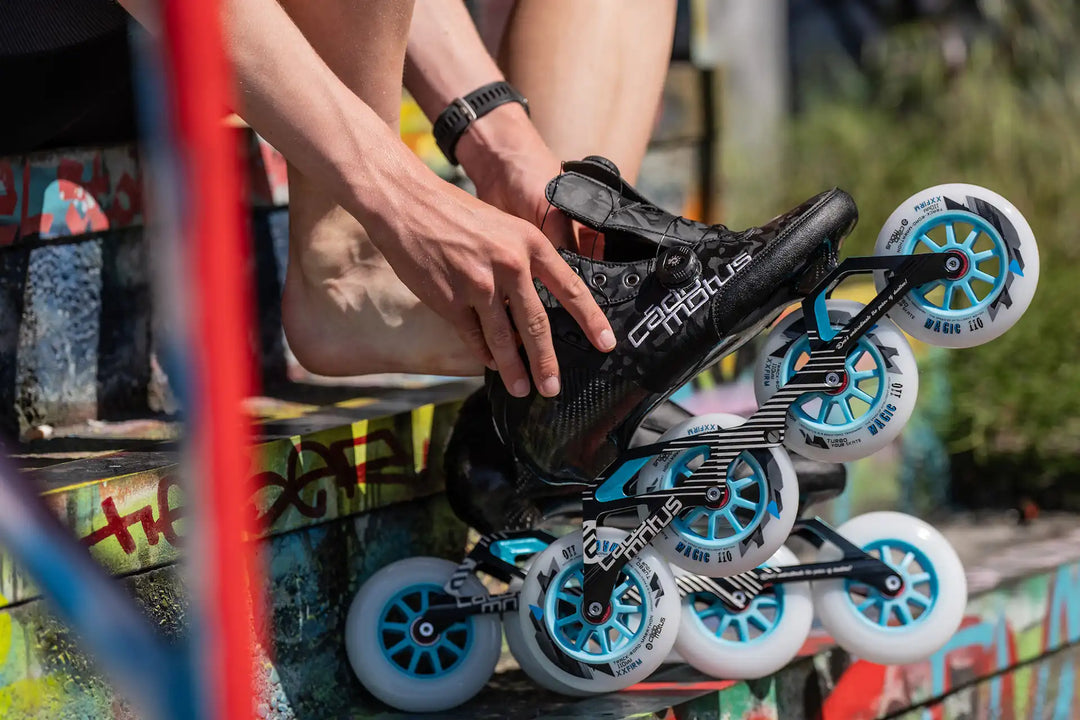
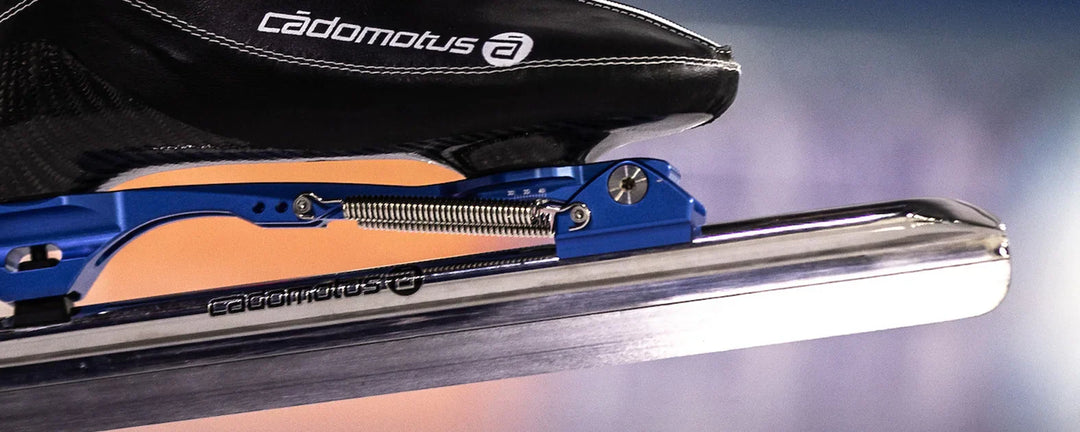
We came at this problem from speed skating. For twenty-five years we built racing boots that had to hold a foot rigidly inside a thin blade footprint at high lateral load — boots where the foot cannot be allowed to move and where a soft upper is not an option. The solution we developed, and have refined across every generation since, is CarbonShell: a carbon monocoque that wraps around the heel and the sides of the foot before any closure is involved.
In a triathlon cycling shoe the intention is that support comes from the shoe itself, not from how hard you cinch the strap. The shell holds the heel locked. The midfoot stays stable. The arch is supported. The closure on top is doing what a closure is supposed to do — keeping the foot in contact with the shell — not compensating for the absence of structure.
The principles behind this aren’t unique to us. Fit experts consistently recommend stiff soles, secure heel hold, proper arch support, and not over-relying on closure tension. What CarbonShell does is execute those principles through a single integrated structure rather than as add-ons stacked onto a soft upper.
The result we hear from riders — and this is reported experience, not a controlled trial — is that the shoe can be worn looser than their previous triathlon shoe while feeling more secure. Less pressure on the top of the foot. More even load distribution. The power comes from a rigid platform under the forefoot rather than from how hard the upper is being clamped.
That’s where the numbness tends to ease for the athletes we work with. Not because we made the toe box wider. Because we removed one of the reasons they were overtightening.
Numb feet aren’t always about width
This is worth saying clearly, because the cycling industry has trained athletes to think every fit problem is a width problem.
A shoe can be wide enough and still be wrong. Volume — the three-dimensional space inside the shoe — matters as much as width. Instep height matters. Arch shape matters. Where the closure pulls from matters. The position of your cleat relative to the metatarsal heads matters.
Two riders with the same forefoot width can need completely different shoes if one has a high instep and the other has a flat one. A shoe with too much volume above the foot will often get overtightened the same way an unsupportive shoe will, because the foot is still moving inside it.
This is also where heat moulding helps. A heat-mouldable shell isn’t a fixed shape that you have to fit into. The shell adapts to your foot under heat, so the support surfaces sit where your anatomy actually is — not where the last designer assumed an average foot would be. Whether this specifically reduces numbness more than any well-fitted alternative isn’t something we can point to a peer-reviewed study for; what we can say is that matching individual anatomy is a sensible way to reduce the gap that causes the foot to move in the first place.

Five things to check before you buy a wider shoe
Before you spend another three hundred euros on the next shoe in the catalogue, work through this. These aren’t a formal diagnostic — they’re the questions we walk through in a fitting session.
- 1 Are you overtightening the closure? Loosen the strap or BOA one full click. If the shoe still feels secure, you may have been compensating for a stability problem rather than a width problem.
- 2 Where exactly does the pressure sit? If it’s on top of the foot, it’s closure pressure. If it’s at the sides or the little toe, that’s volume or width. They’re different problems with different solutions.
- 3 When does the numbness start? If it appears in the first thirty minutes, the shoe is genuinely too tight or too small. If it appears after an hour or two, it’s typically swelling combined with closure pressure — often a sign the shoe wasn’t structurally supporting the foot to begin with.
- 4 Where is your cleat? A cleat positioned too far forward loads the metatarsal heads on every stroke and can compress nerves between bone and shoe. Move it back two or three millimeters before you replace anything. This is one of the best-supported interventions in the bike-fit literature.
- 5 Does the shoe flex when you pedal hard? Put the shoe on a flat surface and press down on the heel cup from the side. If it deforms easily, the shell isn’t doing much. Your foot is likely spending the ride looking for support the shoe can’t provide.
What the numbness is actually telling you
Numb feet are feedback. Your body is reporting something specific about pressure, support and stability inside the shoe. Tightening harder is rarely the answer. A wider shoe is only the answer if the diagnosis was actually width — and in our experience that’s a smaller share of cases than the industry assumes.
A triathlon cycling shoe should disappear underneath you. Power in from T1 before the strap is even closed. Fresh legs at T2. Nothing on the bike between those two points demands your attention.
That’s what CarbonShell is built to do.
Ride Faster. Arrive Fresher.